

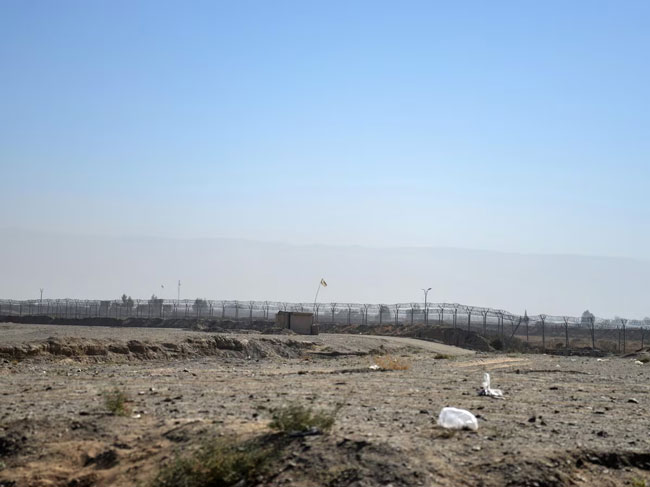
The border stress between Afghanistan and Pakistan has as soon as once more drawn worldwide consideration. The Durand Line — a 2,640-kilometre-long frontier — isn’t merely a geographical boundary, however a lingering scar of colonial historical past that continues to form regional politics, id, and battle.
🔹 Historic Background
The Durand Line was established in 1893 below an settlement between Sir Mortimer Durand, a British diplomat, and Amir Abdur Rahman Khan, the ruler of Afghanistan.
Its objective was to outline the boundaries between British India and Afghanistan to safe the northwestern frontier of the British Empire. Nevertheless, the road bisected the normal homeland of the Pashtun tribes, splitting communities, households, and cultural ties that had existed for hundreds of years.
🔹 Afghanistan’s Rejection
Afghanistan has by no means acknowledged the Durand Line as a global border. Kabul maintains that the settlement was signed below British strain and imposed on Afghanistan towards its will.
Afghan leaders additionally declare the treaty was legitimate just for 100 years, expiring in 1993 — after which they not take into account it binding.
The problem is deeply rooted in Pashtun nationalism: Pashtuns type the bulk inhabitants in japanese Afghanistan and western Pakistan, they usually view the border as a division of their ethnic and cultural unity.


🔹 Pakistan’s Stand
Pakistan, alternatively, acknowledges the Durand Line because the reliable worldwide border and considers it an important a part of its sovereign territory.
In recent times, Islamabad has intensified efforts to fence the border and construct army posts to curb cross-border terrorism, smuggling, and unlawful motion.
Afghanistan has strongly opposed these efforts, calling them a synthetic try and isolate communities and destroy the socio-economic material of the border areas.
🔹 Border Clashes and Latest Escalation
The disagreement has usually turned violent. Through the years, the Durand Line has witnessed frequent skirmishes, air strikes, and cross-border violations.
In response to Afghan sources, the Pakistani army has violated Afghan territory over 1,200 occasions prior to now 4 years and entered Afghan airspace on 710 events.
Tensions flared final week when Pakistani jets bombed areas close to Kabul, prompting Afghanistan to launch a counter-operation on October 11 alongside the Durand Line.
The Afghan authorities described the transfer as an act of reliable self-defense below worldwide regulation after years of “persistence and restraint.”
🔹 Impression on Regional Stability
The Durand Line dispute has far-reaching implications for regional peace and safety. It fuels cross-border militancy, smuggling, and the motion of armed teams.
Consultants warn that so long as this border stays contested, belief and cooperation between Afghanistan and Pakistan will stay fragile — undermining broader stability in South and Central Asia.
🔹 Conclusion
The Durand Line stays a residing remnant of colonial historical past — a line drawn in 1893 that also divides a individuals and destabilizes a area.
For Afghanistan, it represents the lack of id and historic autonomy; for Pakistan, it’s a very important safety boundary.
But for the Pashtun tribes straddling each side, it stays a wound — separating households, heritage, and homeland.