
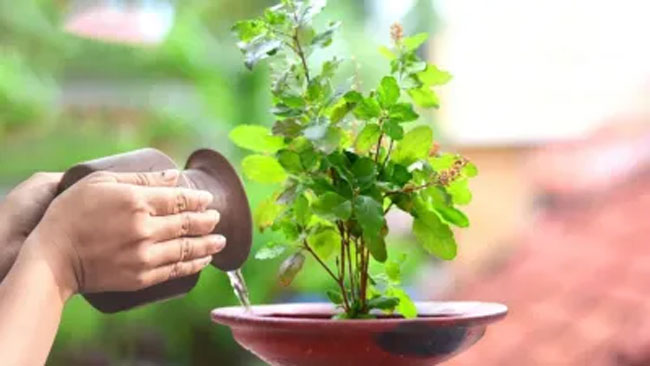
In Indian tradition, Tulsi (the Holy Basil) shouldn’t be seen merely as a plant, however as a residing goddess — the embodiment  of purity, devotion, and divine power. The Tulsi Stotra — a sacred hymn devoted to Goddess Tulsi — holds immense religious significance. It’s stated {that a} single recitation of the Tulsi Stotra with devotion grants the identical advantage as visiting thousands and thousands of sacred pilgrimages.
Tulsi — The Goddess of the Residence, Guardian of Dharma
Tulsi, also called Vrinda Devi, represents unwavering devotion to Lord Vishnu. The legend of the Tulsi Vivah (marriage of Tulsi and Lord Vishnu) symbolizes the everlasting union of devotion and divinity. A house with a Tulsi plant is taken into account a seat of purity and divine safety, radiating peace and positivity.
The Religious Which means of Tulsi Stotra
The verses of the Tulsi Stotra not solely glorify the goddess but in addition convey a deeper philosophical fact — that purity, religion, and self-discipline kind the muse of religious life. When one recites the Tulsi Stotra, it turns into greater than a ritual; it’s a cleaning of the guts and soul.


Scientifically and Psychologically Useful
Past its religious worth, the chanting of the Tulsi Stotra gives psychological peace. The rhythmic sound vibrations calm the nervous system and scale back nervousness. In the meantime, the Tulsi plant releases fragrant compounds that purify the air and promote bodily well-being — making the act each religious and scientific in its therapeutic.
The Benefit Equal to Thousands and thousands of Pilgrimages
Historic texts just like the Garuda Purana, Skanda Purana, and Padma Purana proclaim that reciting the Tulsi Stotra close to a Tulsi plant yields the advantage of visiting numerous holy websites. The essence lies not in bodily journey however in interior purification — the journey of the soul towards divine consciousness.
Proper Time and Technique of Recitation
The perfect time for reciting the Tulsi Stotra is early morning or night, seated close to the Tulsi plant. Mild a lamp, provide water, and start with the mantra “Om Tulasyai Namah.” A centered, honest recitation fills the house with concord, prosperity, and divine grace.
Conclusion
The Tulsi Stotra is greater than a hymn — it’s a path of interior awakening. It teaches that devotion shouldn’t be in outward rituals however within the sanctity of 1’s coronary heart. Simply because the Tulsi leaf comprises therapeutic power for the physique, its hymn carries nourishment for the soul.
To recite the Tulsi Stotra is to embark upon an interior pilgrimage — one which transcends the boundaries of place and time, providing blessings larger than thousands and thousands of sacred journeys.