
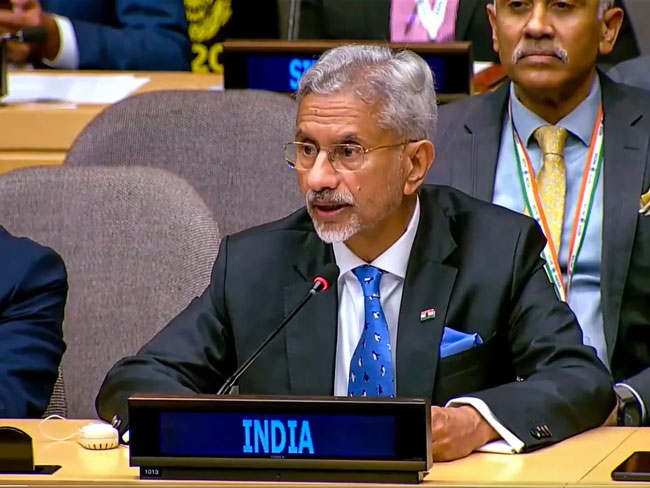
Recent developments from New York make it clear that India remains steadfast in its principles while asserting strategic autonomy on the global stage. During his visit, External Affairs Minister S. Jaishankar openly questioned the West’s, particularly the U.S.’s, double standards. Without directly naming the U.S., he stated, “We cannot establish global peace by putting global growth at risk.”
Speaking at a G20 meeting, Jaishankar emphasized that growth can only be achieved through peace, but peace at the cost of development is unacceptable. His message reflects not only a diplomatic stance but also a sober assessment of the current global economic and political reality. He stressed that any dispute must be resolved through dialogue and diplomacy, rather than by escalating complexities.
In particular, he warned that increasing uncertainty in energy and other essential trade—already fragile in the current global economic environment—serves no one’s interest. India’s continued purchase of Russian oil, despite U.S. pressure, underscores the country’s commitment to its strategic autonomy.


Jaishankar also called for a zero-tolerance approach to terrorism. He asserted that the world must neither be lenient towards terrorism nor provide it support. Anyone working to dismantle terrorist networks is contributing to the global good.
Furthermore, he highlighted the limitations of multilateral institutions, especially the United Nations, in addressing contemporary global challenges. Jaishankar urged strengthening the role of the G20, calling it a platform for stability and constructive action. “G20 members have a special responsibility to reinforce its stability and guide it in a positive direction. The G20 should stand firm against terrorism through dialogue and diplomacy while also strengthening energy and economic security,” he said.
In summary, India is not a passive participant in global policymaking. The country is actively balancing peace and development, taking a firm stance against terrorism, and advocating reforms in multilateral institutions. Jaishankar’s message reflects India’s commitment not only to its own interests but also to fulfilling global responsibilities in an increasingly complex world.