
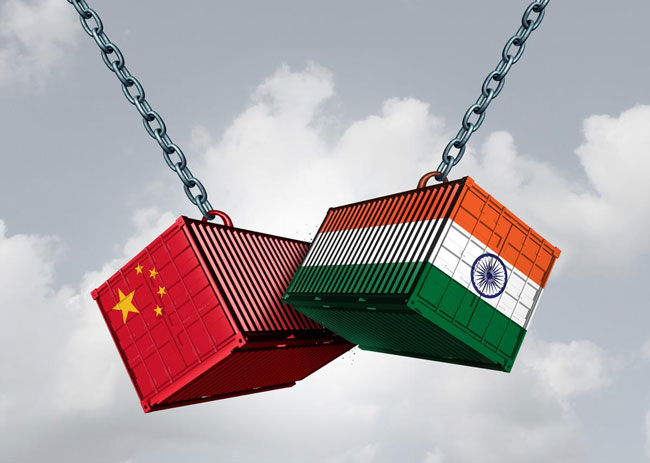
The total world is intently watching the evolving relationship between India and China. Prime Minister Narendra  Modi’s current go to to China and the Shanghai Cooperation Group (SCO) summit have opened new avenues for financial cooperation. For a nation like India with an unlimited market and for China with immense industrial capability, commerce can certainly be mutually helpful. But, behind this shining promise of cooperation lurks a grave hazard – cultural invasion.
From Swords to Tradition
In 1962, China attacked India with swords and weapons; at present it’s placing at our tradition. This battle is much more harmful as a result of we could mistake defeat as victory. India-China commerce has grown quickly lately, and China has change into India’s second-largest buying and selling companion after america. However within the identify of commerce and cooperation, China is steadily intruding into our traditions, religion, and cultural roots.


From Toys to Mindsets
Over 70% of toys bought in India come from China. This isn’t merely an financial problem; it’s a well-planned assault on the mindset of our kids. Chinese language digital toys and video games push youngsters towards on the spot gratification, violence, and consumerism. Conventional Indian video games corresponding to kabaddi, gilli-danda, and kho-kho taught teamwork and social abilities, whereas Chinese language devices typically isolate youngsters in a digital world. The result’s that they drift away from conventional values and embrace industrial glitter.
Feng Shui vs. Vastu Shastra
India’s Vastu Shastra is likely one of the most historical and scientifically grounded traditions on the planet. But China has promoted its Feng Shui globally as a substitute. Sadly, even in India, folks have begun to switch Vastu with Feng Shui objects – from wind chimes to three-legged frogs. These not solely mock our heritage but additionally undermine our scientific traditions. The so-called “Laughing Buddha” statues are nothing however distorted variations of our Lord Ganesha. That is nothing lower than a cultural intrusion.
Festivals within the Market
Whether or not it’s lamps for Diwali, idols for Durga Puja, or colours for Holi – virtually every thing carries a “Made in China” tag. Shockingly, even idols of Lord Ganesha and Goddess Lakshmi are imported from China. Can those that eat snakes, canine, and rats really create sacred idols of our deities? It is a direct insult to our feelings and our civilizational ethos of “Jaisa ann, vaisa mann” – “As is the meals, so is the thoughts.”
When the “Laughing Buddha” replaces Lord Ganesha in our properties, when our kids know extra concerning the “Chinese language New 12 months” than Diwali, it turns into clear that this isn’t commerce alone – it’s a well-planned cultural warfare.
Financial Acquire vs. Cultural Loss
India’s commerce deficit with China continues to rise. By March 2025, it had reached $99.2 billion. However extra worrying than this deficit is the best way China is utilizing financial cooperation to strengthen its cultural affect in India. From festivals and spiritual icons to training and traditions, Chinese language infiltration is seen in all places.
If this continues unchecked, the day shouldn’t be far when future generations will overlook their very own gods and values, and start to worship international symbols. That’s the reason India should draw a transparent line – cooperation solely in commerce and expertise, not in tradition and religion.
India’s Heritage Is Its Power
India possesses the world’s most historical and profound traditions – Yoga, Ayurveda, spirituality, and Vastu Shastra. Our festivals are symbols of unity, identification, and social bonding. Shedding them would imply dropping our very existence. To counter China’s affect, India should revive delight in its heritage and join the youthful era with these timeless traditions.
Conclusion
Prime Minister Modi has undoubtedly positioned India as a robust international financial energy. However we should make sure that financial progress doesn’t come at the price of our cultural lifeline.
India and China could cooperate, commerce, and even share expertise – however we mustn’t ever compromise on our tradition, religion, and traditions. That’s the voice of each Indian, and that’s the soul of our nation.