

In recent events on Monday, 53 Punjabi-origin individuals were tragically killed in separate incidents in Pakistan’s Balochistan and Khyber Pakhtunkhwa regions. Responsibility for these incidents has been claimed by the separatist Baloch Liberation Army. These events have once again highlighted the ongoing conflict in Pakistan, contrasting with its stance on Kashmir vis-à-vis India.
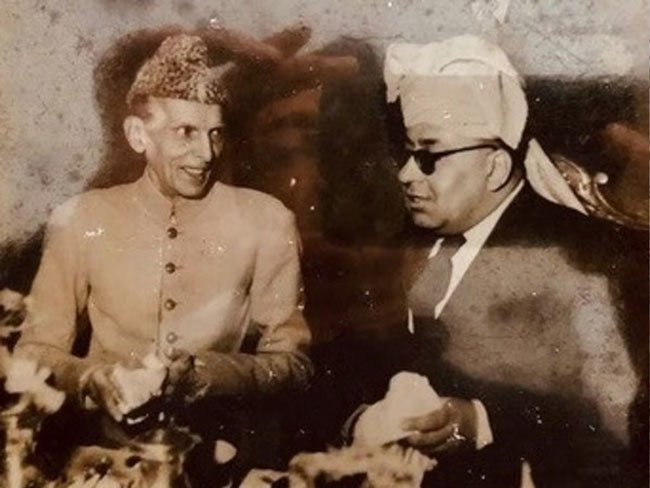
The question arises: why do Baloch people harbor such animosity towards Punjabis in Pakistan? The answer lies both in current grievances and historical contexts. During the partition of India and the creation of Pakistan by Mohammad Ali Jinnah, there was a promise of autonomy for regions under British control, which could either join India or Pakistan. These regions had the option of complete independence as well.
Following August 15, 1947, Balochistan remained independent for 227 days in its four regions: Kalat, Kharan, Lasbela, and Makran. These regions were reluctant to join Pakistan due to their distance from India. Particularly, the Khan of Kalat favored honoring the 1876 agreement that granted autonomy. The agreement stipulated that foreign policy and communication would remain under British control, while local rulers would govern everything else. However, circumstances changed when pressured by Jinnah, three other regions—Kharan, Lasbela, and Makran—opted to join Pakistan.

Nevertheless, Khan Mir Ahmad Yar Khan of Kalat remained staunchly independent. Initially, Jinnah agreed with this decision, even announcing Kalat’s independence on August 5, 1947, right after a meeting in Delhi where Jinnah agreed to merge Kharan and Lasbela with Kalat. Thus, Balochistan came into existence. An agreement was also reached between Kalat and the Muslim League on August 11, 1947, maintaining the independence of Kharan and Lasbela. So much so that the local government has its flag hoisted on Pakistan’s own military police often targets Punjab, is seen as community, which prominent majority perceives holding power significant.